Drink Smarter, Taste Better: What Your Go-To Beer or Wine Is Actually Doing to Your Sushi
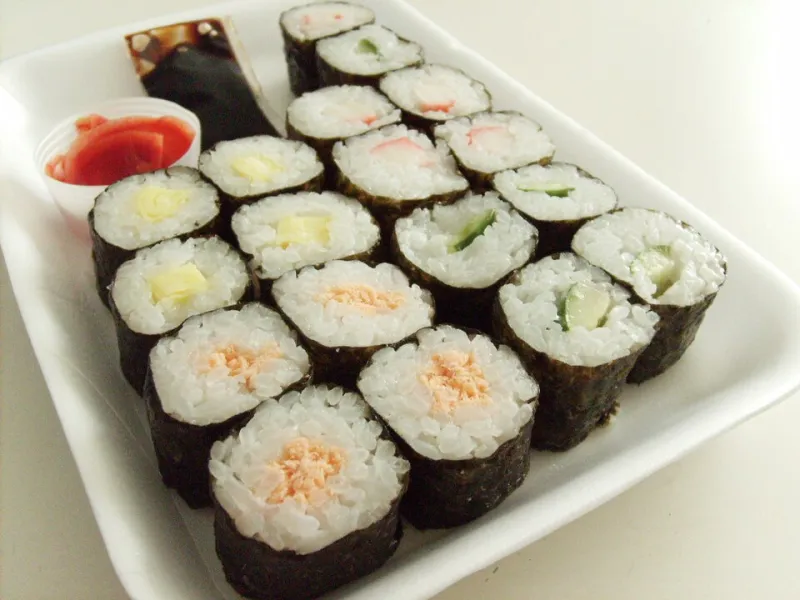
Photo: Priscila Guimarães, CC BY-SA 2.0, via Wikimedia Commons
Let's be honest. Most of us order whatever we feel like drinking and don't give a second thought to how it interacts with a piece of nigiri. A cold beer sounds great with just about anything, right? And a glass of white wine with fish — that's practically a rule. Except when it comes to sushi, both of those instincts can quietly work against you in ways that are hard to pinpoint but impossible to unfeel once you understand them.
This isn't about being a snob. It's about understanding a little food science so you can actually taste what you're paying for.
The Problem With Playing It Safe
American drinking culture tends to gravitate toward bold, assertive flavors — hoppy IPAs, oaky Chardonnays, tannic Cabernets, barrel-aged stouts. These are great beverages on their own. The issue is that sushi, especially traditional nigiri and sashimi, is built around subtlety. A skilled chef might spend years dialing in the acidity of the rice or the precise way a piece of fatty tuna melts across your tongue. A sip of something heavily hopped or aggressively tannic right before or after that bite doesn't just fail to complement the fish — it actively competes with it.
Hops, in particular, are a problem. The bitterness in IPAs and many craft ales coats your taste buds in a way that suppresses sensitivity to delicate umami compounds. Glutamates — the naturally occurring molecules responsible for that savory, lingering depth in fish — essentially get drowned out. You're eating the sushi, but you're not really tasting it.
Tannins in red wine create a similar issue. They bind to proteins and create a drying, astringent sensation that clashes with the fat content in fish like salmon or yellowtail. The result isn't a pairing — it's a collision.
Why Traditional Sake Actually Makes Sense (And Why Most Americans Skip It)
Sake has been paired with sushi for centuries, and that's not just cultural habit. It's chemistry. Unlike wine or beer, sake is naturally low in tannins and has a flavor profile that doesn't fight for dominance on the palate. Its umami-forward character actually reinforces the glutamates already present in fish, creating a kind of flavor amplification that's hard to achieve with most Western beverages.
There are different styles worth knowing. Junmai sake is earthy and full-bodied — great with richer, fattier fish. Ginjo and Daiginjo styles are more delicate and aromatic, pairing beautifully with lighter, cleaner cuts like flounder or snapper. Nigori, the cloudy, slightly sweet style, can work well with spicy rolls where you want something to cool things down without adding more heat.
The reason most American diners skip sake isn't that they don't like it — it's that they've never had it properly explained or recommended. It can taste strange the first time you approach it without context. But once you understand what it's doing for the food, it clicks.
The Surprising Contenders: Craft Soda, Kombucha, and Beyond
Here's where things get interesting. If sake isn't your thing, the next best options might surprise you.
Sparkling water with a citrus twist is criminally underrated. The carbonation gently cleanses the palate between bites without introducing any competing flavor compounds. You reset without interference, which means each piece of sushi gets a fair shot at your full attention.
Dry sparkling wine — think Cava, Prosecco, or a non-dosage Champagne — can work if you're choosing carefully. The key is low residual sugar and minimal oak. Bubbles help, acidity helps, but anything sweet or woody will bring you back to the same problems as a standard Chardonnay.
Kombucha is a genuinely interesting pairing for modern fusion sushi. Its natural acidity mirrors the tang of seasoned rice, and the slight effervescence keeps the palate lively. Ginger-based kombuchas in particular complement spicy rolls and anything with sesame or miso in the profile. At Muse Fusion Sushi, where we're always looking for ways to bridge tradition and bold new ideas, kombucha feels like a natural fit at the table.
Japanese whisky highballs — whisky mixed with sparkling water over ice — have become enormously popular in Japan as a food pairing, and they translate well here. The dilution keeps the spirit from overwhelming the fish, while a gentle smokiness from the whisky can actually enhance the char on seared nigiri.
What Happens in Your Mouth (The Quick Science Version)
Your palate is doing a lot of work during a sushi meal. Taste receptors are picking up on salt, fat, acid, and umami simultaneously, while your nose is processing volatile aromatic compounds that rise from the fish as it warms slightly in your mouth. This is a layered sensory experience that unfolds over about 10 to 15 seconds per bite.
A beverage with high acidity can actually sharpen your perception of these layers — which is why a little yuzu-forward drink or a dry sparkling wine can feel like it makes the fish taste more like itself. Conversely, a beverage with heavy bitterness or tannin can collapse those layers into a single muddy impression. You taste less, not more.
Sugar is another complicating factor. Sweet beverages — even moderately sweet ones — can mask the natural sweetness already present in quality fish, especially in scallop or shrimp. When everything tastes sweet, nothing does.
A Simple Framework for Ordering Smarter
You don't need to memorize flavor chemistry to make better choices. A few practical guidelines go a long way:
- Light fish, light drink. Delicate cuts like halibut, sea bass, or snapper need low-impact beverages — sparkling water, light sake, or dry sparkling wine.
- Rich fish, something with backbone. Fatty tuna, salmon, and mackerel can handle more flavor in the glass — a junmai sake, a whisky highball, or even a lightly hopped wheat beer.
- Spicy rolls, something cooling or acidic. Ginger kombucha, cucumber water, or a dry rosé (yes, rosé) can balance heat without amplifying it.
- Skip the IPA. Just for tonight. Give the fish a chance.
The goal isn't to drink less or drink differently for the sake of rules. It's to actually experience what a great piece of sushi can do when nothing in the glass is getting in the way.