Rebuilding Umami From the Ground Up: What Happens When Japanese Depth Meets American Boldness
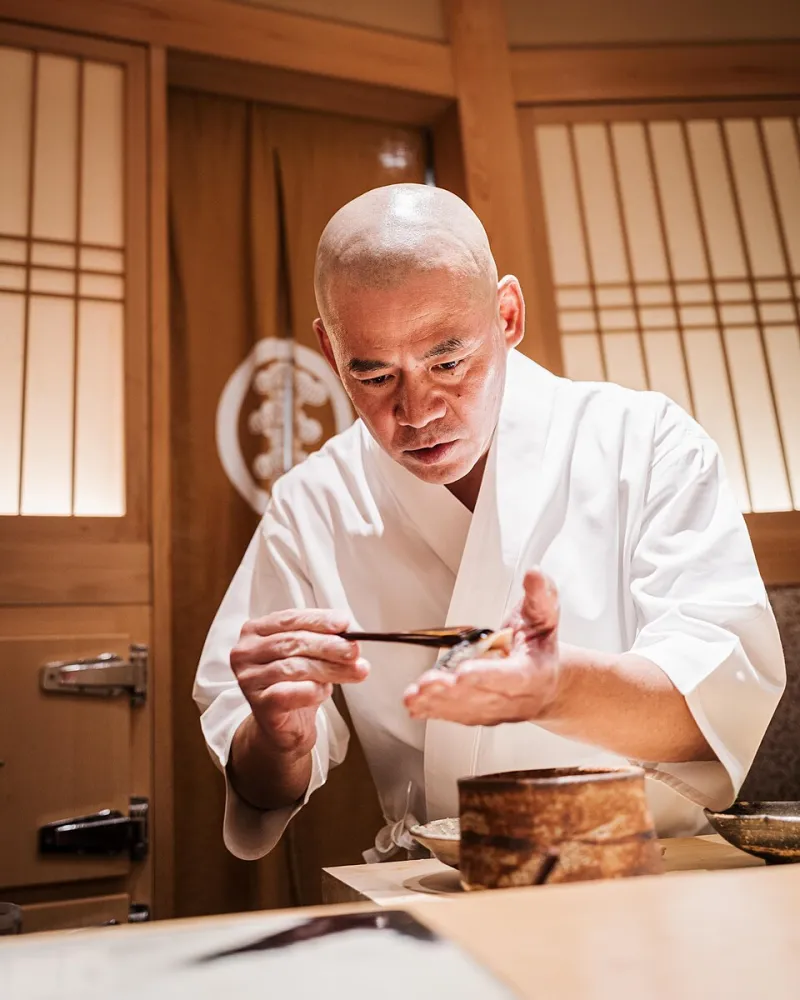
Photo: JuanitoFatas, CC BY-SA 4.0, via Wikimedia Commons
Umami doesn't announce itself. It doesn't hit you like heat or pucker you like acid. Instead, it settles in — a low, resonant richness that makes you reach for another bite before you've even finished the first. For centuries, Japanese cuisine has built entire culinary philosophies around coaxing it out with restraint. A few strips of kombu. A careful pour of dashi. A whisper of bonito.
But something interesting is happening in American sushi restaurants right now. Chefs aren't abandoning that tradition — they're amplifying it. They're asking a genuinely exciting question: what happens when you take umami's foundational science and run it through the filter of American food culture, with all its love of smoke, char, funk, and heat?
The answer, it turns out, is something pretty remarkable.
What Umami Actually Is (And Why It Matters)
Before we get into the remixing, it helps to understand the original track. Umami — often translated as "pleasant savory taste" — is triggered primarily by glutamates, naturally occurring amino acids found in ingredients like kombu seaweed, bonito flakes, shiitake mushrooms, and aged miso. When you eat these foods, glutamate molecules bind to specific taste receptors on your tongue, sending a signal to your brain that reads as deep, mouth-coating savoriness.
What makes umami particularly interesting from a food science perspective is the concept of synergy. Certain compounds — inosinate (found in fish and meat) and guanylate (found in dried mushrooms) — don't just add to glutamate's effect when combined with it. They multiply it. A dashi broth made from kombu and bonito isn't twice as savory as either ingredient alone. It can be up to eight times more potent. That's not a typo.
Traditional Japanese cuisine has understood this intuitively for generations. Modern fusion cooking is just now learning to hack it.
Fermented Black Garlic: The Unexpected Bridge
One of the most compelling new pairings showing up in contemporary sushi kitchens is fermented black garlic alongside wasabi. On paper, this sounds aggressive — black garlic has a molasses-like sweetness and a deep, almost balsamic funk, while wasabi delivers sharp, sinus-clearing heat. In practice, something much more nuanced happens.
Black garlic is loaded with S-allyl cysteine and a suite of Maillard reaction compounds developed during its weeks-long fermentation process. It also carries a quiet but significant hit of glutamates. When it meets wasabi's isothiocyanates — the compounds responsible for that distinctive nasal burn — the heat gets softened and elongated, and the umami underneath gets pulled forward. Instead of a sharp jab, you get a slow, warming wave of savory complexity.
For American diners who grew up loving roasted garlic on everything from pizza to steak, black garlic reads as familiar. It's a flavor bridge — something that feels recognizable enough to be comforting but different enough to be exciting.
Smoke, Meat, and Dashi: An American Umami Equation
If fermented black garlic is a subtle bridge, smoked meat dashi is a full-on fusion overpass.
Dashi — the delicate broth that underpins so much of Japanese cooking — is traditionally made with kombu and bonito. The kombu contributes glutamates. The bonito adds inosinate. Together, they create that synergistic umami punch. Now imagine swapping the bonito for smoked brisket trimmings, or infusing the broth with a few pieces of smoked turkey neck.
The inosinate is still there. The smoke adds an entirely new layer of complexity — volatile aromatic compounds that American palates associate deeply with comfort, celebration, and slow-cooked depth. The kombu's glutamates are still doing their job. But the overall profile shifts from clean and oceanic to something richer, more grounded, and unmistakably familiar to anyone who's spent time around a backyard smoker.
This isn't a gimmick. From a chemistry standpoint, it's a legitimate extension of dashi logic using ingredients that resonate with a different cultural food memory. The science stays intact. The emotional resonance expands.
Why American Palates Respond the Way They Do
American food culture has always had a complicated relationship with subtlety. That's not a criticism — it's just context. A food landscape shaped by barbecue, buffalo wings, and loaded nachos tends to calibrate flavor expectations toward the bold end of the spectrum. When traditional Japanese umami — quiet, minimalist, deeply intentional — lands on that palate without translation, it can feel underwhelming.
What fusion chefs are doing is essentially recalibrating the delivery mechanism while preserving the chemistry. The umami is still there in full force. But it's arriving wrapped in flavor cues — smokiness, caramelization, fermented funk — that American diners already have a strong emotional connection to. It's not dumbing anything down. It's meeting people where they are.
Miso is a perfect example. Traditional white miso is mild, almost sweet. But aged red miso — particularly when it's incorporated into a compound butter or used as a glaze on something like a seared scallop — delivers an intensity that feels much more native to American flavor expectations. Add a touch of smoked paprika or a drizzle of chili crisp, and you've built an umami experience that honors the ingredient's origins while speaking fluently in American.
The Ongoing Experiment
What's exciting about this moment in sushi culture is that the experimentation is genuinely two-directional. It's not just Japanese techniques being Americanized — it's American ingredients being run through Japanese culinary logic and coming out transformed. Chefs are asking what happens when you ferment something like a classic American condiment. What happens when you apply the precision of a Japanese knife technique to a cut of meat that's never seen a sushi counter before?
The answers are still coming in. But the through-line is always umami — that foundational, scientifically verifiable sense of savory depth that makes food feel satisfying in a way that's hard to articulate but impossible to ignore.
At its best, the umami remix isn't about replacing anything. It's about expanding the vocabulary. The original Japanese is still there, still beautiful, still technically precise. The American translation just makes it possible for more people to hear it clearly — and to fall in love with it on their own terms.