The Flavors You Feel But Can't Name: Inside Sushi's Invisible Ingredient Layer
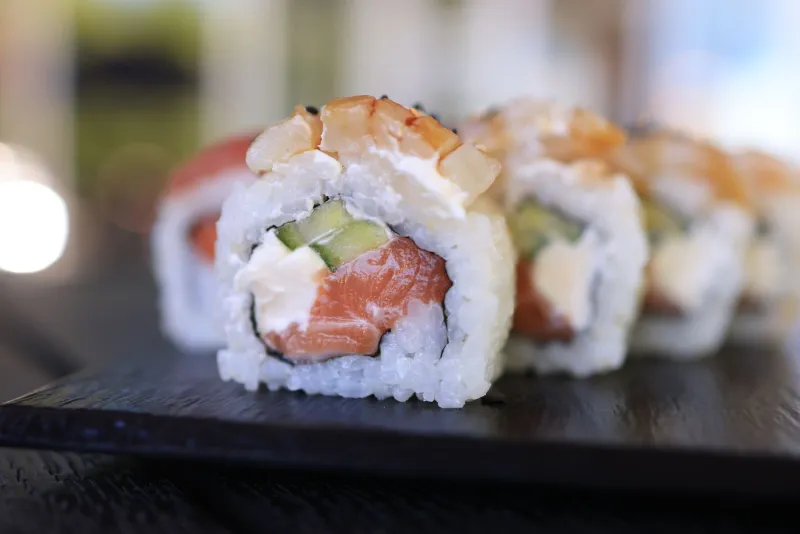
There's a moment that happens to a lot of people the first time they eat genuinely exceptional sushi. The fish is gone. The rice is gone. But something is still happening in your mouth — a warmth, a depth, a kind of resonance that doesn't attach itself to any specific flavor you can label. You might describe it as richness, or complexity, or just wow, but the actual source of the sensation stays stubbornly out of reach.
That's not a mystery. It's chemistry. And understanding it will change the way you eat sushi for the rest of your life.
What We Mean by Ghost Ingredients
Ghost ingredients aren't secret additives or hidden techniques in a sinister sense. They're the flavor compounds, aromatic molecules, and taste-active substances that operate below the threshold of conscious identification — things your palate registers and responds to before your brain has a chance to put a name on them.
Every cuisine has them. French cooking has its fond — the caramelized proteins and sugars left in the pan that form the base of a great sauce. Mexican cooking has its complex dried chili moles, where the individual peppers dissolve into something greater than any single component. Sushi has its own invisible architecture, and it's arguably more sophisticated than either, because the flavors have to do their work without the cover of heat, heavy fat, or bold spice.
When sushi is cold and raw and clean, the ghost ingredients aren't hidden behind anything. They're just operating at a frequency your palate hasn't been trained to hear.
Kombu: The Foundation You Never See
If you've eaten sushi at a serious restaurant and wondered why the rice tasted different from anything you've made at home — even when you used the same vinegar, the same ratios, the same technique — kombu is probably why.
Kombu is dried kelp, and it's the backbone of dashi, the fundamental Japanese stock that underlies much of the cuisine. But its role in sushi extends beyond stock. Many sushi chefs steep a small piece of kombu in the rice cooking water, or tuck it between layers of aging fish during a process called kobujime. The result is a transfer of glutamates — specifically glutamic acid — into whatever the kombu touches.
Glutamates are the chemical basis of umami, the fifth taste that sits alongside sweet, sour, salty, and bitter. Glutamic acid is the compound that makes parmesan cheese taste like parmesan cheese, that makes a great burger taste meatier than its ingredients explain, that makes your mouth water before you've consciously decided to want more. In sushi, it creates a savory depth that registers as fullness or satisfaction without announcing itself as a distinct flavor.
You won't taste kombu in your nigiri. But if it was used well, you'll feel it.
Sake's Quiet Contribution
Sake is obviously a beverage, but in a professional sushi kitchen it's also an ingredient — and one whose flavor effects on food are far more subtle than its effects on the diner who drinks too much of it.
Sake contains a range of amino acids and organic acids that interact with proteins in fish, softening texture and suppressing certain fishy odor compounds called trimethylamine. Chefs sometimes use sake in marinades, in the seasoning water for rice, or as a component in sauces where it contributes a barely perceptible sweetness and a faint floral quality that rounds out sharper flavors.
The interesting thing about sake's flavor contribution is that it's almost entirely subtractive — it works by removing or suppressing negative notes rather than adding positive ones. The result is a cleaner, softer flavor profile that you experience as freshness or delicacy without being able to point to its cause. You don't taste sake in the fish. You taste the absence of the things sake removed.
Mirin and the Science of Gloss
Mirin — a sweet Japanese rice wine with lower alcohol content than sake — shows up in teriyaki glazes and ponzu sauces, but its role as a ghost ingredient is more nuanced than sweetener.
When mirin is reduced or applied to a surface with heat, its sugars undergo Maillard reactions that produce dozens of aromatic compounds simultaneously. These compounds don't all taste like anything in particular — many of them operate at the aromatic level, meaning they're experienced through retronasal olfaction (the smell receptors at the back of your throat) rather than your taste buds. What you register is a sense of warmth, caramel depth, and complexity that seems to come from the dish itself rather than from any identifiable ingredient.
In fusion sushi specifically, mirin appears in places where it's doing this kind of invisible work — in the seasoning of rice for baked rolls, in the glaze on crispy salmon skin, in the base of spicy mayo preparations where its sweetness balances the heat without tasting sweet.
Toasted Sesame: Aroma as Flavor
Here's a quick test: close your eyes and smell a bowl of freshly toasted sesame seeds. Your mouth will water before you've tasted anything. That's not a coincidence — it's your brain interpreting aroma as flavor, a process called crossmodal perception that happens constantly while you eat.
Toasted sesame contains over 40 volatile aromatic compounds, including pyrazines (the same family that makes coffee and roasted nuts smell the way they do) and furans that contribute warm, nutty, slightly sweet notes. When these compounds hit your olfactory system, your brain doesn't neatly separate "this is a smell" from "this is a taste" — it integrates them into a unified flavor experience.
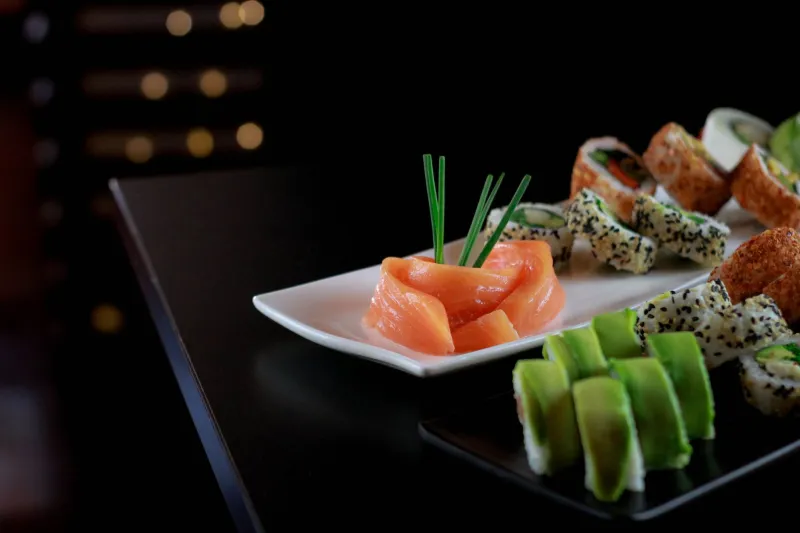
This is why a few sesame seeds on top of a roll do more than their visual presence suggests. They're not garnish. They're an aromatic layer that changes the perceived flavor of everything beneath them.
How Restaurants Use This Knowledge
The best sushi chefs aren't just thinking about what goes on the plate — they're thinking about what goes between the flavors. The kombu in the rice, the sake in the marinade, the mirin in the glaze, the sesame on the surface: each of these is a layer that the diner experiences without identifying, and their cumulative effect is the difference between sushi that tastes good and sushi that creates that ineffable sensation of more.
Fusion restaurants are particularly interesting in this context because they often layer ghost ingredients from multiple culinary traditions simultaneously. A roll might use kombu-infused rice as its base, a jalapeño ponzu that includes mirin, and a toasted sesame-coconut garnish — Japanese, Mexican, and Southeast Asian ghost ingredients working together in a way that no single palate would naturally decode.
You don't need to decode it. But knowing it's happening shifts the way you eat. Instead of reaching for the soy sauce to add flavor, you start noticing the flavor that's already there — underneath, between, behind everything visible on the plate.
That's the ghost. And once you start tasting for it, you'll find it everywhere.