When a Bite Sends You Somewhere Else: The Strange Science of Sushi and Sense Memory
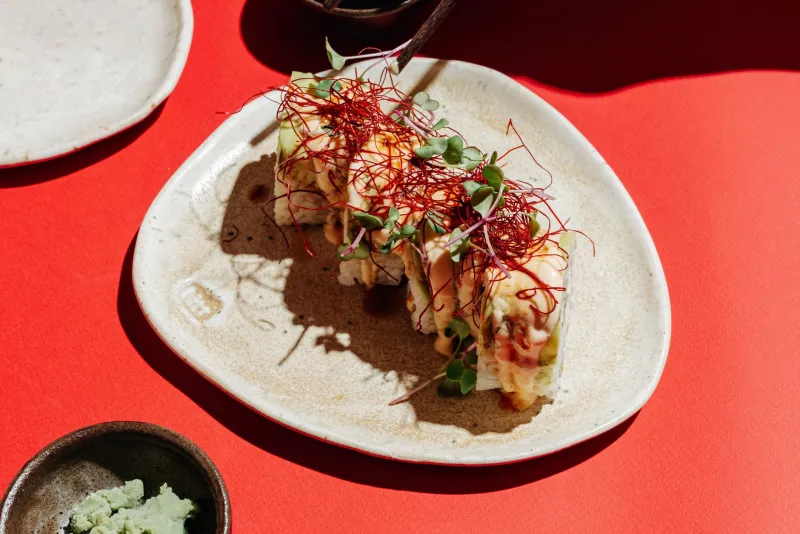
You're sitting at a sushi bar. The chef slides a roll across the counter — maybe it's got a citrus-cured yellowtail, a whisper of toasted sesame, and a thin slice of jalapeño that hits your tongue with a slow, climbing heat. You take a bite. And then, out of nowhere, you're eight years old again, standing in your aunt's backyard in late July, the smell of grilled corn and lime in the air.
You weren't expecting that. Neither was anyone else at the table. But here's the thing: it wasn't random.
Your Brain Is Doing Something Remarkable Right Now
Synesthesia is typically described as a neurological condition where stimulation in one sense automatically triggers a response in another — people who "see" colors when they hear music, or who "taste" words. But researchers have spent the last decade expanding that definition. What's becoming clearer is that most of us experience softer, less dramatic versions of cross-sensory blending all the time, especially when food is involved.
Dr. Rachel Herz, a neuroscientist who studies the psychology of smell and taste at Brown University, has written extensively about the connection between olfactory memory and emotional recall. Her work points to a simple but stunning truth: the olfactory bulb — the part of your brain that processes smell — is directly wired to the hippocampus and amygdala, which handle memory and emotion. No other sense has that kind of shortcut. Sight goes through a relay station. Sound does too. But smell, and by extension a lot of what we call "taste" (which is really flavor, a combination of smell and taste), goes straight to the emotional core.
That jalapeño-sesame-citrus combination didn't just taste good. It triggered a cascade of associations your brain had been storing for decades.
The Chef Who Thinks Like a Neuroscientist
At forward-thinking fusion sushi restaurants, some chefs are starting to treat this phenomenon less like a happy accident and more like a design principle.
"I think about flavor the way a filmmaker thinks about a score," says one executive chef at a contemporary Japanese fusion spot in Los Angeles. "You're not just feeding someone. You're creating a sequence of emotional cues. The right combination of acid, fat, heat, and umami in a single bite can feel like a memory you forgot you had."
That's not a metaphor. When fusion chefs layer, say, a miso-butter base with crispy shallots and a squeeze of yuzu, they're stacking sensory inputs that your brain has to rapidly categorize — and when it can't find a perfect match in your existing flavor vocabulary, it reaches for the closest emotional analogue. Sometimes that's a specific memory. Sometimes it's just a feeling: warmth, comfort, excitement, melancholy.
The intentionality here is what separates a great fusion roll from a gimmicky one. Anyone can throw unexpected ingredients together. The harder craft is understanding which combinations will land emotionally, not just gastronomically.
Why Fusion Sushi Is Uniquely Positioned for This
Traditional omakase has always understood restraint — the idea that a single pristine ingredient, prepared with respect, says more than a dozen competing flavors ever could. And that philosophy isn't wrong. But fusion sushi operates in a different register.
When you're combining Japanese technique with American ingredients — smoky chipotle, sweet corn, aged cheddar, fresh herbs from a Southern garden — you're not just creating new flavor profiles. You're creating new emotional territories. For American diners especially, these hybrid combinations can trigger memory associations that purely traditional sushi never would, simply because they're drawing from a wider cultural pantry.
A roll built around miso-glazed short rib might remind someone of Sunday pot roast. A spicy tuna hand roll with pickled green apple might conjure a state fair. These aren't accidents at the best fusion restaurants. They're calculated, even if the calculation is intuitive.
"I grew up in Texas and trained in Tokyo," one fusion chef told us. "When I put smoked fish with a dashi broth and a little bit of mesquite char, I'm not confused about my identity. I'm drawing a line between two worlds I actually lived in. And when guests taste it, they feel that tension — and then they feel it resolve. That resolution is the memory trigger."
The Texture Dimension
Here's something the conversation about flavor memory often misses: texture is doing enormous work. Neuroscientists who study multisensory perception have found that the mechanical sensation of food in the mouth — the crunch, the give, the resistance — activates regions of the brain associated with past physical experiences. Crunch, specifically, is deeply nostalgic for most Americans. It's popcorn at the movies. It's potato chips at a summer cookout. It's the snap of a taco shell.
When a sushi chef adds a tempura crunch, a crispy rice base, or even a toasted breadcrumb element to a roll, they're not just adding texture for contrast. They're adding a sensory signal that your brain has been filing away since childhood. Pair that with the right flavor combination, and you've got a full-on sense-memory event.
This is why the best fusion rolls tend to feel personal even when you've never eaten anything like them before. They're using universal sensory language — heat, crunch, fat, acid — in combinations that feel like a story you already know.
Designing for the Unexpected
So what does this mean for how you eat, and where you eat?
It means the next time a bite of sushi sends your mind somewhere unexpected, pay attention to what went into it. The chef may have been working harder than you realized — not just on flavor balance or visual presentation, but on the emotional architecture of the experience itself.
And if you're building your own sushi night at home, think about the ingredients that hold memory for you personally. What do you associate with comfort? With celebration? With a specific season or place? Start layering from there, using Japanese technique as the frame and your own sensory history as the palette.
The best meals don't just feed you. They remind you of something — or someone, or somewhere — that you didn't know you were missing. The science says that's not an accident. The chefs who understand that are building experiences that last well beyond the last bite.
And honestly? That's a pretty extraordinary thing to do with fish and rice.