The Art of Feeling Full: How Sushi Plates Trick Your Brain Into Loving Less
There's a moment at a really good sushi restaurant — the kind where the lighting is just right and the chef is moving with that quiet, unhurried confidence — when a plate arrives in front of you and it looks almost too beautiful to eat. Three pieces. Maybe four. Plenty of empty space around them. And somehow, inexplicably, it feels like more than the overstuffed platter you'd get somewhere else.
That feeling isn't a coincidence. It's craft. And once you understand what's actually happening, you'll never look at a sushi plate the same way again.
Negative Space Isn't Empty — It's Working
In design, negative space is the area around and between subjects. In visual art, it creates breathing room and draws attention to what matters. In sushi plating, it's one of the most powerful tools a chef has.
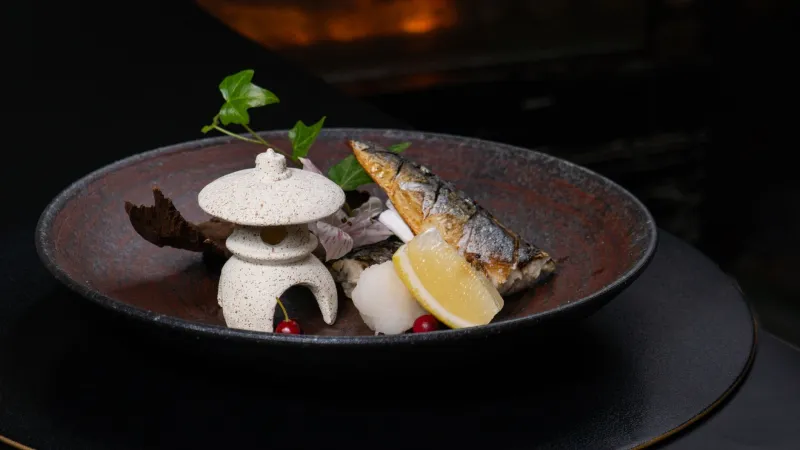
When a few pieces of nigiri are arranged on a wide, minimal ceramic plate with generous space around them, your brain doesn't register emptiness — it registers intentionality. The food looks deliberate, precious even. Contrast that with a plate packed edge to edge, and suddenly everything blurs together. Nothing stands out. Your brain has to work harder to process it, and paradoxically, it feels like less of an experience even if there's technically more food.
High-end sushi restaurants — and increasingly, fusion spots pushing the format into new territory — lean into this hard. A single beautifully torched piece of salmon nigiri with a thin stripe of yuzu kosho, placed slightly off-center on a matte black slate? That's not minimalism for aesthetics alone. That's your perception of value being carefully, deliberately shaped.
The Plate Itself Is Part of the Portion
Here's something most diners never think about: the vessel matters as much as what's in it. Researchers studying food psychology have repeatedly found that the same amount of food looks more generous — and satisfies more — when served on a smaller plate. Sushi chefs have understood this intuitively for generations.
A five-piece omakase course served on a wide, shallow platter the size of a dinner plate reads as a curated, luxurious experience. Those same five pieces crammed onto a small rectangular board? Now it just looks like not enough food. The portion didn't change. The perception did.
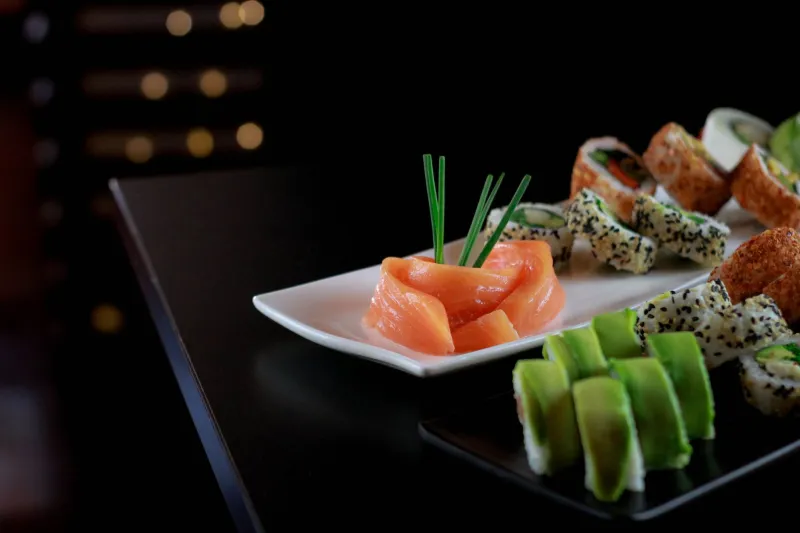
Color contrast plays into this too. Warm-toned fish — salmon, yellowtail, tuna — pops against cool slate or dark ceramic. Your eyes lock onto it immediately. The vividness of the color makes the food feel more present, more alive on the plate. It's louder, visually. And louder reads as more satisfying before you've even taken a bite.
Height, Angle, and the Drama of Dimension
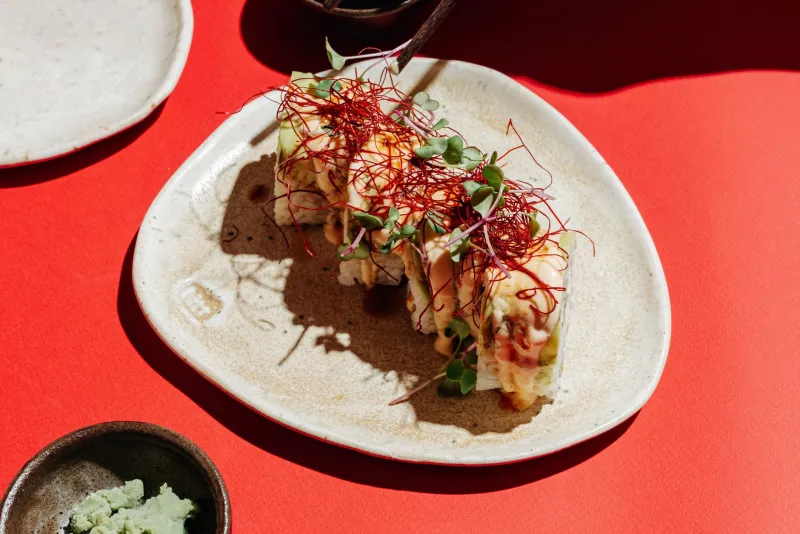
Flat food is forgettable food. This is why modern sushi — especially in the fusion space — plays with height and layering. A roll topped with thin avocado slices fanned out in an arc, or a piece of nigiri finished with microgreens that add just a centimeter or two of vertical drama, creates a three-dimensional object that your eye reads as substantial.
This isn't just style over substance. Dimensionality signals effort. And effort, in a dining context, translates directly to perceived value. When something looks like it took time and skill to construct, your brain assigns it more worth — which means you feel more satisfied consuming it, even if the actual caloric content is modest.
Fusion sushi leans into this especially well. Think of the California roll's evolution into something topped with thinly sliced cucumber ribbons, a drizzle of spicy aioli, and a scatter of tobiko. The base is familiar. The architecture makes it feel like an event.
Garnish Is Not Decoration — It's Communication
The shiso leaf tucked beside your nigiri. The thin diagonal slice of pickled daikon. The tiny mound of freshly grated wasabi. These aren't afterthoughts. They're punctuation marks that tell your brain this plate was composed, not assembled.
In traditional Japanese plating philosophy, every element on a dish is supposed to earn its place — nothing is there purely for show. That ethos carries over into how modern sushi restaurants approach garnish. When something small and precise appears beside a piece of fish, it signals that someone cared about every square inch of that plate. And caring, it turns out, is one of the most powerful flavor enhancers there is.
From a purely psychological standpoint, garnishes also create visual anchors. They give your eye somewhere to rest and move from, which slows down how you visually consume the plate. You linger on it longer before eating, which builds anticipation — and anticipation, research consistently shows, makes food taste better.
What Home Cooks Can Actually Steal From This
The good news is that none of these principles require a professional kitchen or a $300 omakase budget. They're transferable, and they work.
Go bigger on the plate. If you're making sushi at home, resist the urge to pile everything onto the most convenient dish. Use a wide, flat platter and give your rolls and nigiri room to breathe. The food will look more intentional immediately.
Play with contrast. A dark cutting board or a plain white ceramic plate creates more visual pop than a busy patterned dish. Let the color of the fish do the talking.
Add one thoughtful garnish. You don't need much. A few sesame seeds, a thin curl of green onion, a small wedge of lemon placed with purpose — these signal care and elevate the whole presentation.
Think vertically. Even a small adjustment — overlapping avocado slices, a slight lean to your nigiri, a topping that adds height — transforms a flat plate into something that reads as dimensional and crafted.
Slow down the reveal. If you're hosting, bring the plate to the table and give people a moment to look before they eat. That pause builds anticipation and, genuinely, makes everything taste better.
The Real Conspiracy
So is it a trick? Kind of. But it's the best kind — one that makes your actual experience richer and more satisfying, not one that cheats you out of something. The sushi restaurants doing this well aren't hiding the size of your portion. They're framing it in a way that lets you appreciate it fully.
At its core, that's what great food presentation does. It removes distraction, focuses attention, and creates the conditions for a real moment with what's on your plate. Whether you're sitting at a high-end counter in Manhattan or plating homemade spicy tuna rolls on a Friday night, the principles are the same.
Less, framed right, genuinely feels like more. And once you start seeing it, you can't unsee it.