Hot, Cold, and Everything Between: The Temperature Truth Behind Great Sushi
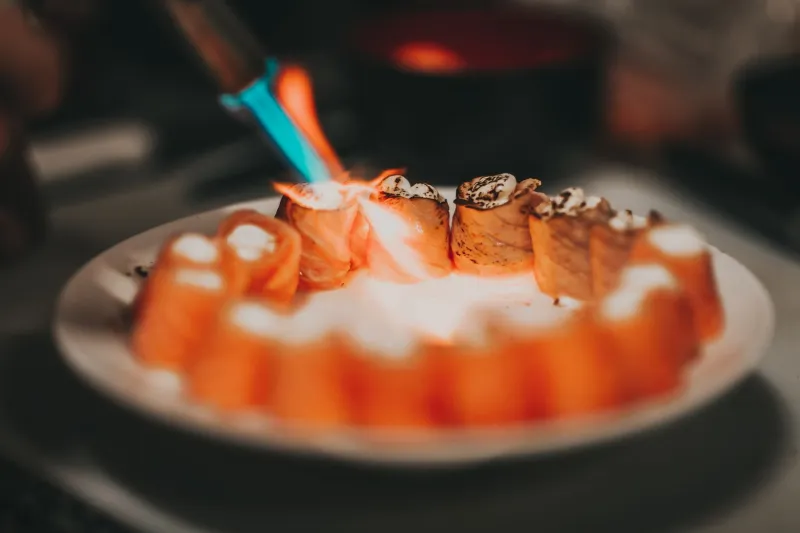
There's a moment at a lot of American sushi counters where someone watches a chef fire up a small butane torch and quietly wonders: wait, is that supposed to happen? Maybe they say something. Maybe they just squint at the flame kissing the top of a salmon nigiri and decide to trust the process.
That instinct to question it makes sense. In the US, sushi has been culturally packaged as a cold food. Cold fish. Cold plate. Cold everything. But that framing leaves out a huge part of how sushi actually works — and why some of the most thoughtful chefs in the country are getting very deliberate about heat.
The Cold Assumption Has a History (and a Limit)
The idea that sushi equals cold isn't random. It traces back to legitimate food safety concerns that shaped how sushi was introduced to American diners in the '70s and '80s. Keeping raw fish cold slows bacterial growth. That's real science, and it matters. But somewhere along the way, "keep it cold for safety" became "cold is what makes sushi good," and those two things aren't the same.
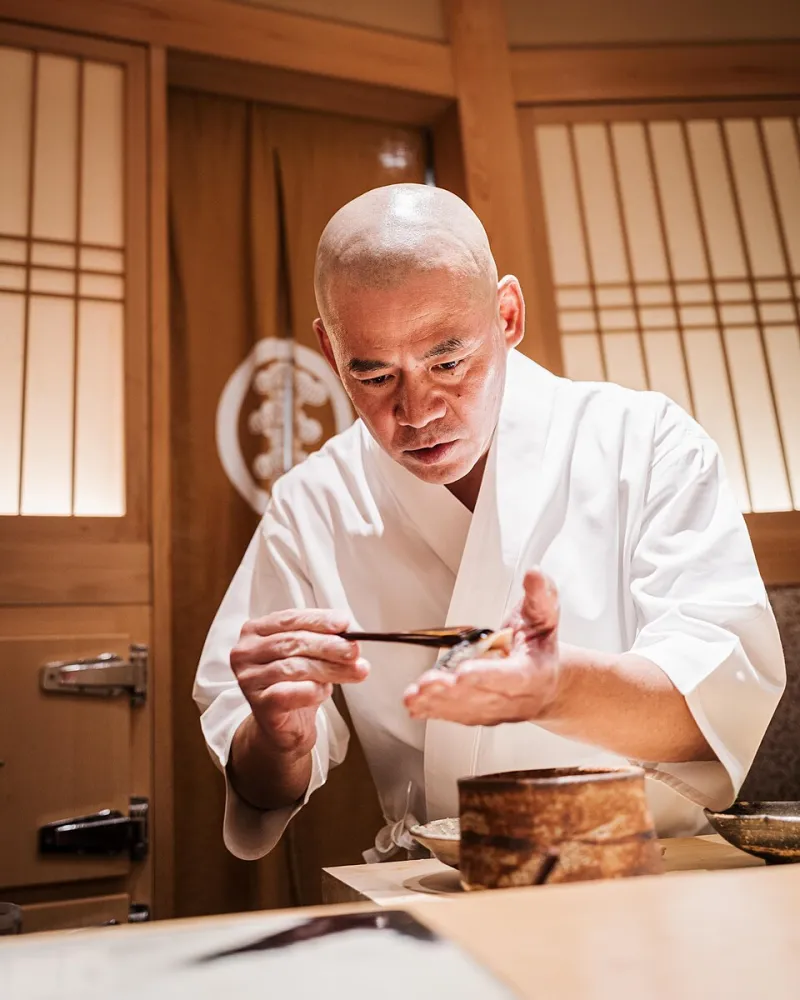
In Japan, the relationship between temperature and quality is way more nuanced. Traditional Edomae sushi — the style that evolved in old Tokyo — was never about serving fish straight from ice. Toppings were often cured, marinated, lightly cooked, or rested at room temperature before hitting the rice. The goal was always flavor and texture harmony, not just a cold bite.
That context matters a lot when you're trying to understand why modern fusion chefs aren't just torching things for drama.
What Warm Rice Is Actually Doing
Let's start with the foundation — literally. Sushi rice, when it's done right, isn't served cold. It's served at roughly body temperature, somewhere in that 90–98°F range. This isn't an accident or a shortcut. It's intentional, and the science behind it is pretty compelling.
Warm rice is more pliable. It holds together without becoming a compressed brick. More importantly, the seasoned vinegar mixture that defines sushi rice — the balance of rice vinegar, sugar, and salt — integrates differently at warmer temperatures. The flavors bloom. They carry. Cold rice mutes all of that. If you've ever had sushi where the rice tasted flat or weirdly dense, there's a decent chance it came straight from a refrigerator.
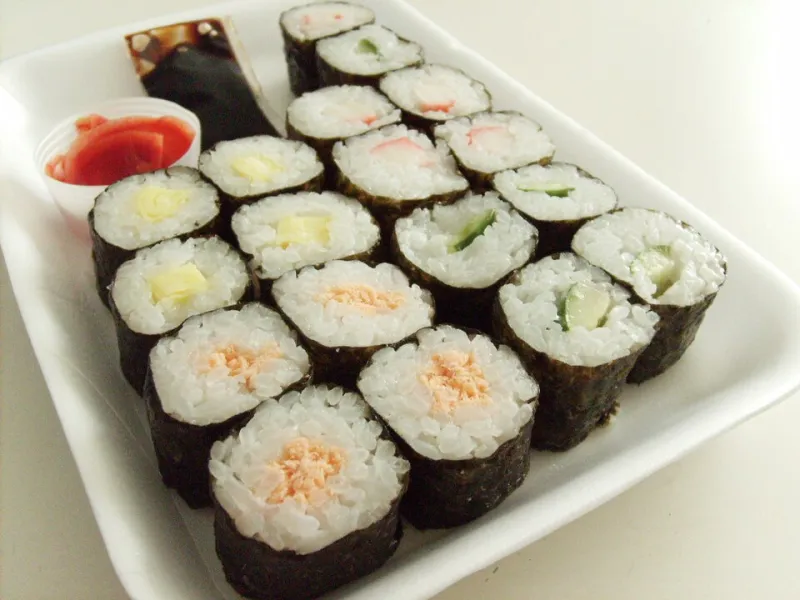
This is one reason why great sushi at a serious restaurant feels so different from a grocery store grab-and-go box. Temperature management of the rice alone is a skill that takes real practice.
The Torch Isn't Theater — It's Chemistry
Okay, so back to that flame. Torching fish isn't a gimmick invented for Instagram, even if it photographs well. The technique has roots in aburi-style sushi, a Japanese method where the surface of a fish or shellfish is briefly seared while the interior stays raw.
What's actually happening is the Maillard reaction — the same chemical process that makes a seared steak or toasted bread smell incredible. When proteins and sugars on the fish's surface hit high heat, they transform. New flavor compounds form. Fat renders slightly and redistributes. The texture changes at the surface while the inside stays silky and cool. You get this layered experience in a single bite: caramelized, rich, almost buttery on the outside, clean and fresh in the middle.
Salmon responds to this particularly well because of its higher fat content. But chefs are also applying it to yellowtail, scallops, and even certain vegetable toppings with real success. At fusion restaurants, you'll see this technique pushed further — a brief torch hit on a piece of fish that's already been marinated in something with natural sugars, like mirin or a citrus glaze. The caramelization gets more complex. The flavor layering gets more interesting.
Where Fusion Chefs Are Taking This
The most exciting thing happening right now isn't just torching nigiri. It's the broader conversation among fusion chefs about temperature as a deliberate flavor variable — something to manipulate the same way you'd adjust seasoning or acidity.
Some chefs are serving warm broth-based elements alongside cold fish, using the contrast as a palate experience rather than just a garnish. Others are experimenting with warm sauces — not just spicy mayo drizzled from a squeeze bottle, but actually temperature-controlled reductions and emulsions — applied at the last second so the heat hits the fish briefly before the whole thing lands in front of you.
There's also a growing interest in what happens to different cuts of fish at different resting temperatures. Fatty tuna, for example, expresses its fat differently when it's allowed to come up slightly from refrigerator temperature before service. The fat softens. The mouthfeel opens up. It's a small thing, but experienced diners notice it.
Interestingly, some traditional purists — chefs who've spent decades defending Edomae orthodoxy — are quietly acknowledging that these fusion approaches aren't as far from the original philosophy as they look. The principle of maximizing the ingredient's potential at the moment of eating? That's not fusion thinking. That's just good sushi thinking.
What This Means When You're Ordering
You don't need to become a temperature nerd to eat better sushi. But a few things are worth keeping in mind.
If your sushi rice is cold and hard, something went wrong in the kitchen — or the sushi sat too long. That's a quality signal worth noting. If a chef at a fusion counter offers you an aburi option, it's worth trying, especially on fattier fish. The flavor difference is real, not just visual.
And if you're ordering online for pickup or delivery — something a lot of us are doing these days — think about how temperature transit affects what you're getting. Delicate nigiri doesn't love a 30-minute ride in a bag. Rolls with more structural integrity, or items that are intentionally served at room temperature, actually hold up better. It's worth asking or reading the menu descriptions carefully.
The Bigger Takeaway
Sushi isn't a cold food. It's a precise food. The goal has always been to serve each component at whatever temperature makes it taste best — which sometimes means ice-cold, sometimes means lightly torched, and sometimes means somewhere in the middle that your mouth will figure out before your brain does.
The chefs who understand this, whether they're working in a traditional Tokyo-style counter or a fusion kitchen in Austin or Chicago, are the ones turning out food that actually surprises you. Not because they're breaking rules for the sake of it, but because they understand what the rules were trying to accomplish in the first place.
Temperature is an ingredient. It always has been.