Roll With It: Why Messy Home Sushi Is Secretly Good for the Art Form
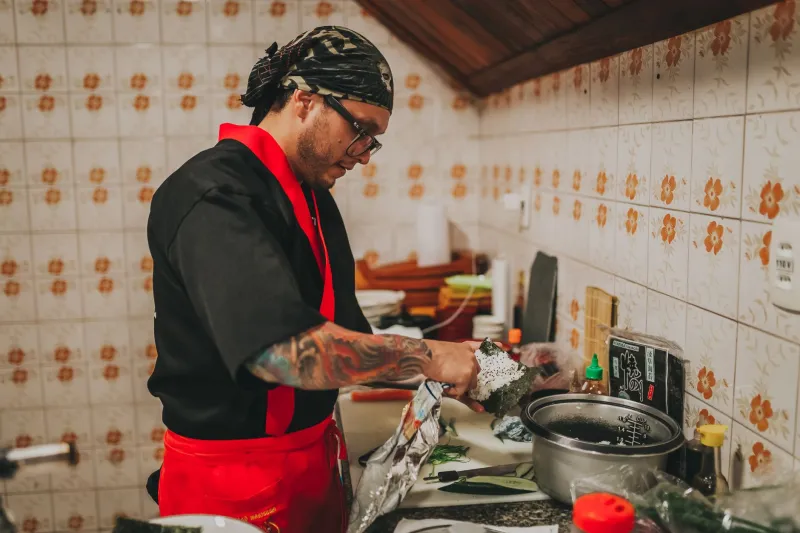
Somewhere in suburban Ohio, someone is right now pressing avocado into a rice-covered nori sheet, watching it slide sideways, and deciding that cream cheese will fix the structural problem. The result will photograph terribly, taste surprisingly okay, and get posted to TikTok with the caption first attempt!! followed by seventeen crying-laughing emojis.
And honestly? Good for them. Keep going.
The conversation around home sushi-making tends to fall into two camps: enthusiastic encouragement from people who've never worked a fish counter, and barely-concealed horror from traditionalists who believe sushi should only be made by people who've trained for a decade under fluorescent light in a Tokyo kitchen. Both camps are missing the point.
What Home Cooks Actually Get Wrong (And Why It Matters)
Let's be honest first, because honesty is more useful than cheerleading.
Professional sushi is better than home sushi in ways that are genuinely difficult to close the gap on. The rice is the biggest one. Sushi rice — shari, in Japanese — is not just cooked rice with vinegar splashed on it. It requires a specific rice variety, precise water ratios, a particular vinegar blend, and a technique for folding rather than stirring that preserves each grain's integrity while achieving the right temperature and texture. Most home cooks get the rice wrong, and since rice makes up roughly half of most sushi, that's a significant disadvantage from the jump.
Fish sourcing is another real issue. Sushi-grade fish is a loosely regulated term in the US, which means the salmon you grabbed from the grocery store case might be fine or might be something you really shouldn't eat raw. A reputable sushi restaurant has direct relationships with suppliers, knows the cold chain of every piece of fish on the menu, and has a chef who can visually assess freshness in ways that a quick sniff at the seafood counter simply can't replicate.
And then there's knife work. A properly sharpened yanagiba slicing through a loin of tuna is doing something that a home chef's utility knife fundamentally cannot — it's cutting cells rather than tearing them, which affects both texture and how flavor compounds are released when you eat. These aren't small differences.
So: professional sushi has real, meaningful advantages. That's just true.
But Here's What Gatekeeping Gets Wrong
The insistence that sushi can only be made "correctly" by trained professionals with access to specific ingredients and tools ignores something important about how food cultures actually evolve.
Sushi as Americans know it was itself an act of creative improvisation. The California roll — now a gateway bite for millions of sushi beginners — was invented in Los Angeles in the 1970s, reportedly to work around American diners' discomfort with raw fish and unfamiliar seaweed textures. Chefs swapped out tuna for imitation crab, flipped the roll inside-out to hide the nori, and added avocado because it had a buttery richness that felt familiar. Purists at the time were horrified. History has been less unkind.
Fusion sushi, the category that defines the modern American sushi scene, is built entirely on the logic that rules are starting points, not destinations. Baked scallop rolls, spicy mayo everything, jalapeño-topped yellowtail — these didn't come from a Tokyo training program. They came from chefs who were willing to ask what if in ways that tradition actively discouraged.
Home cooks are doing the same thing, just with fewer skills and more enthusiasm. And occasionally, the ratio works in their favor.
The Unexpected Innovations Coming From American Kitchens
Scroll through the sushi content on YouTube or Instagram and you'll find home cooks doing things that would make a traditionalist's eye twitch — and a fusion chef quietly take notes.
People are making sushi bakes: deconstructed rolls baked casserole-style, topped with furikake and spicy mayo, served with nori chips for scooping. The texture is nothing like traditional sushi. The flavor profile hits something different — warmer, richer, more communal. It spread from Filipino-American home kitchens across social media and is now appearing on actual restaurant menus.
Some home cooks are experimenting with non-traditional proteins — smoked pulled pork, Nashville hot chicken, even mac and cheese as a filling — and while the results are often chaotic, the underlying question they're asking (what else can this format hold?) is exactly the question that drives fusion cuisine forward.
Others are playing with global flavor profiles in ways that trained chefs sometimes can't, because they don't have professional reputation to protect. Korean gochujang instead of sriracha. Chimichurri as a sauce component. Mango habanero glazes. Some of it is terrible. Some of it is genuinely interesting. The ratio isn't the point — the willingness to experiment is.
The Real Relationship Between Home and Professional
The most useful way to think about home sushi-making isn't as a lesser version of restaurant sushi — it's as a different activity entirely, with its own value.
Making sushi at home teaches you things you can't learn by ordering it. You develop a tactile understanding of rice texture. You start to recognize what properly seasoned shari actually tastes like versus under-vinegared rice. You learn — through failure — why the fish-to-rice ratio matters. These experiences make you a more perceptive eater when you sit down at a real sushi counter. The chef's skill becomes visible in a way it wasn't before you tried and struggled with the same techniques.
And the boldness that home cooking requires — the willingness to try something without knowing if it'll work — is the same quality that drives culinary innovation at every level. The fusion movement that defines modern sushi culture didn't come from people playing it safe.
So keep rolling your lopsided, over-sauced, cream-cheese-assisted home sushi. Take notes on what works. Eat the good ones, laugh at the bad ones, and then go out and order from a chef who's spent years getting this right — with fresh eyes and a deeper appreciation for exactly what that skill is worth.
The art form is better for having both.