Too Many Rolls, Too Little Joy: The Hidden Cost of Infinite Sushi Menus
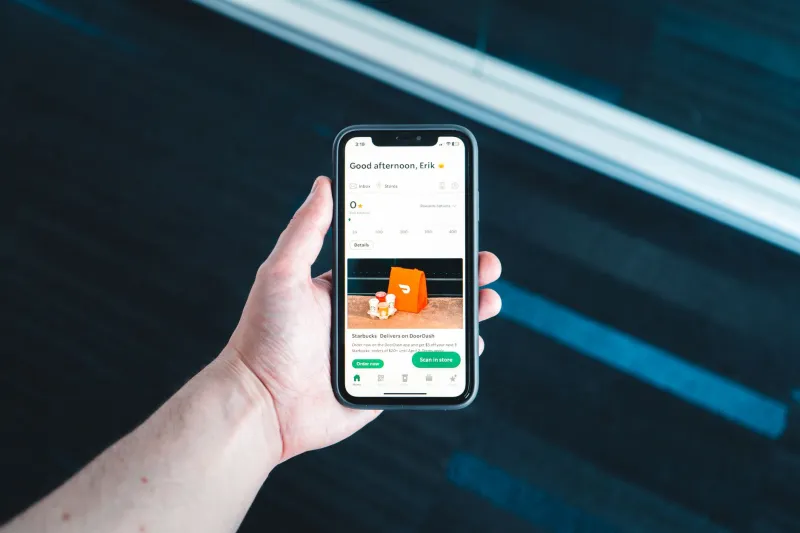
You open the app. You're hungry. The menu loads and — wow — there are 187 items. Dragon rolls, rainbow rolls, spicy tuna stacks, baked scallop handrolls, something called the Volcano Supreme. You've got options. You've got freedom. So why, forty-five minutes later when the food finally arrives, does it feel like you ordered wrong?
You probably didn't order wrong. You just ordered too freely.
This is the sushi ordering paradox, and it sits at the uncomfortable intersection of psychology, food culture, and the very real consequences of digital menus that never have to end.
The Science of Too Much
Psychologist Barry Schwartz coined the phrase "paradox of choice" back in 2004, and while he wasn't thinking about spicy salmon rolls when he wrote it, the principle maps onto online sushi ordering almost perfectly. When we have more options than we can meaningfully evaluate, we don't make better decisions — we make more anxious ones. And anxious decisions breed regret, even when the food is objectively good.
Here's the mechanism: every choice you make depletes a small but measurable amount of mental energy. Researchers call this decision fatigue. Early in a decision session, your brain is sharp, weighing options carefully. But the more decisions you stack — should I get the spicy tuna or the yellowtail? Does this place do crispy rice well? Is the baked crab roll worth the extra $4? — the more your brain starts defaulting to shortcuts. Sometimes that means picking randomly. Sometimes it means defaulting to whatever's most familiar, not most satisfying. And almost always, it means second-guessing yourself after the fact.
A 2000 study by Sheena Iyengar and Mark Lepper — the famous "jam study" — found that shoppers were ten times more likely to buy jam when offered six options versus twenty-four. Fewer choices, more action, more satisfaction. Sushi is jam. A beautiful, precisely constructed, sometimes raw jam.
Why Digital Menus Make This Worse
A physical menu at a sushi bar has natural limits. It's a laminated page or two, maybe a chalkboard special. A chef across the counter might catch your eye and say, the hamachi is incredible today. The environment itself filters your choices.
An online menu has no such guardrails. There's no natural stopping point, no ambient cue that says okay, enough browsing. There's no chef nudging you toward what's fresh. There's just an infinitely scrollable list, often organized more by category logic than by what's actually worth ordering. The baked rolls are next to the specialty rolls are next to the poke bowls are next to the desserts, and somewhere in there your appetite is quietly losing the plot.
Restaurants aren't necessarily doing this on purpose. Listing everything you offer makes sense from a business standpoint — you don't want customers missing items they'd love. But the cumulative effect on the customer experience is real, and it's underexplored.
There's also the photography problem. Every item on a well-produced online menu looks incredible. The dragon roll photo was taken under professional lighting with a lens that makes the avocado glow like something sacred. The spicy mayo catches light in ways that defy physics. When everything looks equally compelling, nothing stands out — and you're back to picking based on vibes rather than genuine preference.
The Omakase Antidote
Here's the interesting flip side: the dining format with the fewest choices — omakase, where the chef decides everything — consistently produces the highest satisfaction ratings among sushi diners. That's not a coincidence.
When you surrender the menu entirely, something psychologically significant happens. You stop auditing every bite against the imagined alternative you didn't order. You're not wondering whether the salmon nigiri would have been better than the tuna. You're just eating what's in front of you, which — when a skilled chef made the call — is almost always excellent.
Decision fatigue disappears because there were no decisions to fatigue. Regret disappears because there was no choice to second-guess. What's left is just the food, the moment, and your actual experience of both.
You don't need to go full omakase to access this effect, though.
Smarter Ways to Order Online
The goal isn't to eliminate choice — it's to limit the window in which you make choices, and to make them more intentional.
Set a number before you open the menu. Decide you're ordering four items, not forty. Commit to that before you even look at the options. This creates a natural constraint that mimics the filtering effect of a physical menu.
Read descriptions, not just names. A roll called "Sunset Bliss" tells you nothing. The description — crispy shrimp, mango, jalapeño, ponzu — tells you whether it matches what you actually want right now. Names are marketing. Ingredients are information.
Order one thing you've never tried. This sounds counterintuitive as a satisfaction strategy, but it works. Novelty is satisfying in a way that familiar comfort food often isn't, and it short-circuits the endless comparison loop because you have no baseline expectation to disappoint.
Trust the restaurant's featured picks. When a spot highlights certain rolls on their online menu, that's often the chef's version of a recommendation. It's not always accurate, but it's a starting point that reduces the scope of your search from 187 items to maybe six.
Order hungry, not anxious. If you've been staring at a menu for twenty minutes and nothing feels right, close the app. Drink some water. Give your brain two minutes of rest. Come back and pick the first three things that look good. You'll be happier with that meal than with whatever you'd have chosen after another twenty minutes of deliberation.
What This Means for How We Think About Sushi
Sushi, at its core, is a cuisine built on restraint. The best nigiri is three ingredients: rice, fish, a whisper of wasabi. The most celebrated sushi chefs in the world edit obsessively — not just what goes on the plate, but what gets left off. That philosophy of purposeful limitation is baked into the food's DNA.
When we approach ordering with the same intentionality, something shifts. The meal feels more deliberate. The bites feel more earned. And the satisfaction that follows isn't just about the food — it's about the relationship between choice and commitment, between options and presence.
Your next online order doesn't have to be a scroll through 200 possibilities. Pick five things. Mean it. Eat well.