Sushi Bar, Open Mind: The Surprising Reason Your Best Ideas Show Up Over Omakase
You've probably had this happen before. You've been stuck on something for days — a design direction, a pitch, a creative decision that just won't resolve itself — and then you sit down at a sushi counter, watch a chef press rice into something that looks almost too deliberate to be edible, and somewhere between the second and third piece, the answer shows up like it was waiting there the whole time.
That's not a coincidence. And it's not magic, either.
The Ritual Is Doing More Work Than You Think
There's a reason so many writers, designers, musicians, and entrepreneurs in cities across the US have quietly turned the sushi bar into their unofficial thinking space. The experience has a specific structure to it — an arrival, a sequence, a pace — that's almost impossible to replicate anywhere else.
Unlike a regular restaurant meal, where you order everything at once and kind of just wait, eating at a sushi counter unfolds in real time. Each piece arrives individually. You're not managing a plate; you're receiving a series of small moments. That rhythm forces your attention into the present in a way that's genuinely rare in daily life.
Neuroscientists have a term for the mental state you drift into when you're absorbed but not stressed: a low-alpha brainwave state. It's the same headspace associated with daydreaming, meditation, and — critically — the kind of diffuse thinking that tends to produce unexpected connections. The sushi counter, with its gentle pacing and sensory engagement, is surprisingly good at nudging you there.
Watching Someone Else Do Something Skillfully Is Its Own Kind of Reset
There's also something specific happening when you sit close enough to watch a chef work. It's not just entertainment. Observational learning — watching another person perform a skilled, focused task — has been shown to activate mirror neuron systems in the brain, which are deeply tied to creativity and empathy.
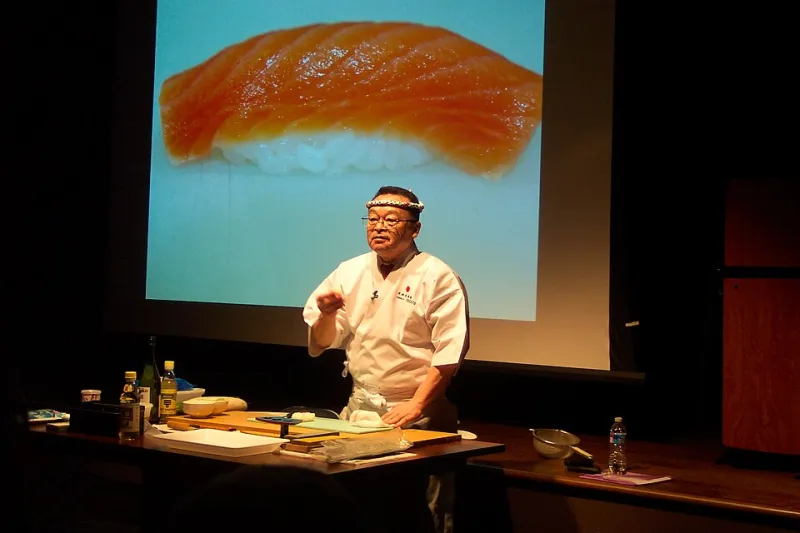
When you watch a sushi chef slice fish with that kind of practiced calm, or press a piece of nigiri with exactly the right amount of pressure, your brain isn't passively receiving a show. It's participating in a low-level way. That engagement pulls you out of your own head, breaks the loop of whatever you've been obsessing over, and opens up cognitive space.
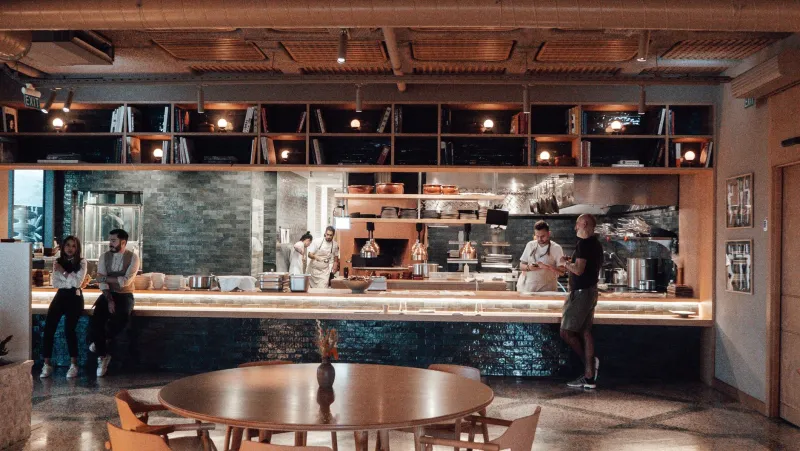
At Muse Fusion Sushi, the counter experience is designed with this in mind, even if nobody calls it that explicitly. The open kitchen isn't just aesthetic — it's an invitation to witness the intersection of tradition and invention happening right in front of you. Watching a chef balance a classic Japanese technique with a genuinely unexpected ingredient combination is its own kind of creative permission slip. If that works, what else might?
Fusion as a Mental Model
This is where the Muse Fusion Sushi approach gets philosophically interesting. Traditional sushi is built on rules — the right rice temperature, the correct ratio of vinegar, the way a knife should move through a particular cut of fish. Those rules exist for real reasons and produce real results. But fusion cuisine asks a different question: what happens when you apply that same discipline to ingredients and flavor profiles that weren't supposed to go together?
For creative professionals, that framing is quietly radical. Most creative blocks aren't about a lack of ideas — they're about an inability to break out of the established rules of whatever field you're working in. Watching a chef successfully violate a convention and produce something better for it is a visceral demonstration that constraints are starting points, not ceilings.
A graphic designer who's been stuck inside a brand's rigid visual language might watch a roll get finished with a drizzle that has no business working as well as it does, and something clicks. A songwriter who's been forcing a bridge might taste a flavor combination that shouldn't coexist on paper and suddenly hear something new. The mechanism is the same: fusion demonstrates that the unexpected combination isn't just acceptable — it's often where the best stuff lives.
The Social Geometry of the Counter
There's one more element worth naming: the counter itself as a social space.
Sitting at a bar — any bar, really — creates a particular kind of low-stakes conversation opportunity. You're side by side, not face to face. There's no pressure to maintain eye contact or perform engagement. You can talk or not talk. The shared experience of watching the same chef, eating the same sequence of dishes, gives strangers a natural common ground without requiring any social effort.
Creative breakthroughs famously happen in casual, unstructured conversations — the kind where you're not trying to solve anything, just talking. The sushi counter is structurally excellent at generating exactly those interactions. You mention something you're working on. The person next to you says something offhand. A chef overhears and adds a completely tangential thought. None of it is a brainstorm. All of it is useful.
This is especially true at a place like Muse Fusion Sushi, where the menu itself tends to spark opinions. A fusion roll that challenges expectations is a conversation starter. People have takes. Takes lead to tangents. Tangents lead to ideas that wouldn't have surfaced in a meeting room.
Why This Matters More Than It Sounds
We talk a lot about the ingredients in sushi — the fish, the rice, the technique. We talk less about what the experience of eating it does to the person on the other side of the counter. But the environment you eat in, the pace at which food arrives, the degree to which your senses are engaged — all of it shapes your mental state in ways that are measurable and real.
The best creative environments tend to share certain qualities: they're immersive without being overwhelming, they follow a structure that removes decision fatigue, they expose you to something being done skillfully, and they make space for accidental conversation. The sushi bar, it turns out, checks every one of those boxes.
So the next time you're stuck — on a project, a problem, a creative direction that won't resolve — it might be worth skipping the fourth cup of coffee and the blank document. Pull up a stool. Watch someone turn tradition into something new. Let the sequence do its work.
The answer might show up somewhere around the third piece.