Who's Really Running the Kitchen? How American Diners Are Reshaping Sushi From the Inside Out
For most of sushi's history in the United States, the influence moved in one direction. Japanese tradition set the standard. American diners adapted. The California roll was the original compromise — a concession to unfamiliar textures and raw fish anxiety — and for a long time, it defined the ceiling of what American sushi culture could produce.
That ceiling is gone now. And the reversal happening in its place is one of the more quietly fascinating stories in contemporary food culture.
The Direction of Influence Has Flipped
Chefs working at the intersection of Japanese tradition and American appetite will tell you something surprising: the feedback loop runs both ways now. American preferences — for bigger flavors, more textural contrast, bolder visual presentations — aren't just being accommodated on US menus. They're actively informing what some Japanese chefs are experimenting with back home.
This isn't entirely new. American fast food reshaped global eating habits decades ago. But sushi feels different because it's a cuisine built on precision and restraint. The idea that American boldness could enhance rather than overwhelm it would have seemed absurd twenty years ago.
Today, it doesn't.
What Americans Actually Brought to the Table
It's easy to frame American influence on sushi as purely a dumbing-down story — more sauce, more crunch, less nuance. That narrative exists, and it's not wrong in every case. But it misses the genuine contributions.
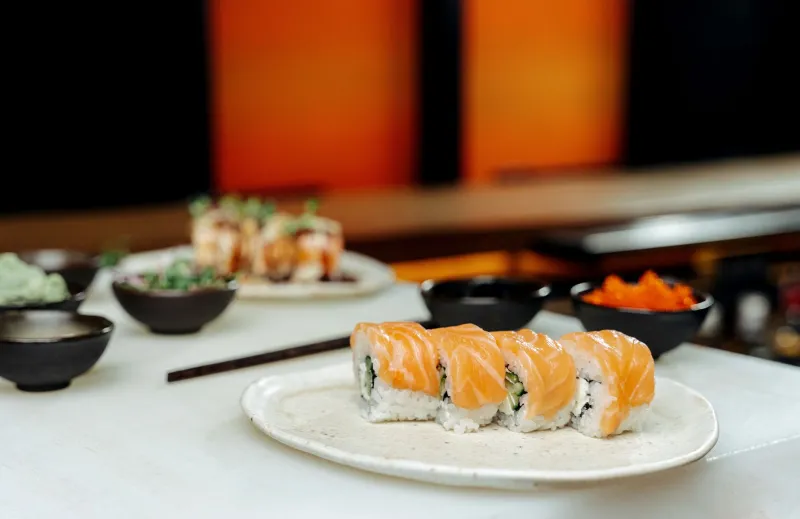
Textural ambition. American diners have an appetite for contrast that's pushed sushi chefs to think harder about texture as a design element. The combination of crispy tempura flakes, creamy avocado, and firm fish in a single bite isn't a Japanese tradition — it's an American innovation that actually works. The best fusion rolls aren't just about flavor; they're about the physical experience of eating, and American diners have been vocal advocates for making that experience more dynamic.
Flavor boldness that creates new pairings. The American love of heat, smoke, and richness has produced some genuinely interesting sushi combinations. Jalapeño with yellowtail became a signature at Nobu for a reason — the pepper's bright heat does something to the fish's delicate fat that wasabi simply doesn't. Truffle oil on toro, when used with restraint, amplifies rather than obscures. These aren't accidents. They're the result of American palates pushing chefs to explore flavor relationships that traditional Japanese technique hadn't prioritized.
Presentation as experience. American dining culture, shaped by everything from Instagram to the theatrical traditions of steakhouses and teppanyaki, has elevated visual presentation to a primary expectation. This has pushed sushi restaurants — including traditional ones — to think more intentionally about how a plate looks before it's touched. Some purists bristle at this. But there's an argument that it's made the craft more rigorous, not less.
Where It Goes Wrong
Not every American influence deserves celebration. There are places where market pressure has genuinely degraded the art form, and it's worth being honest about them.
The portion arms race is real. American expectations around value-for-money have pushed some restaurants toward oversized rolls that are harder to eat and structurally incoherent. A roll that requires two bites isn't a better roll — it's a roll that's lost control of itself.
Sauce dependency is another issue. When every piece arrives pre-drizzled with three different condiments, the chef is making decisions that should belong to the diner. More importantly, it signals that the underlying fish might not be interesting enough to stand on its own. Great sushi doesn't hide behind sauce. It invites you to taste something real.
And the novelty cycle — where a new "crazy" ingredient gets added to a roll specifically because it's unexpected — has produced a lot of forgettable food. Novelty and creativity aren't the same thing. One is a marketing strategy. The other is a skill.
Evolution or Dilution? The Honest Answer
The honest answer is: both, depending on the kitchen.
In the hands of chefs who understand Japanese culinary philosophy — who know why certain techniques and flavor combinations exist — American influence becomes a genuine creative resource. It adds vocabulary without abandoning grammar. The results can be remarkable: fusion that feels inevitable rather than forced, bold without being reckless.
In the hands of chefs who are primarily chasing trends or managing food costs, the same influences produce something thinner. More Instagram-friendly, maybe. Less satisfying as food.
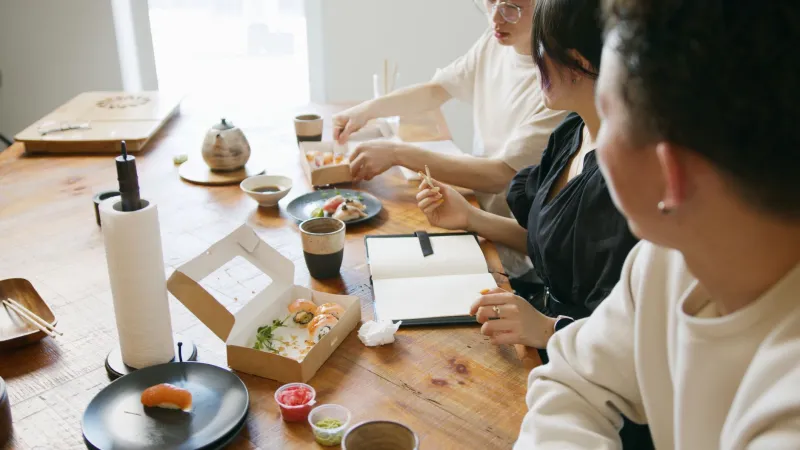
The good news is that American diners are increasingly sophisticated enough to tell the difference. The explosive growth of omakase dining in US cities — where diners surrender control to the chef and experience Japanese-rooted precision — suggests that the American palate isn't just demanding boldness. It's also developing genuine appreciation for restraint, seasonality, and craft.
What This Means for the Future of Sushi
Sushi in America is in a genuinely interesting moment. The cuisine is no longer purely an import. It's been partially naturalized — shaped by local ingredients, local tastes, and local creative energy in ways that have produced something distinct from what you'd find in Tokyo.
The most exciting version of this story isn't about replacement. It's about dialogue. American diners asking for more, Japanese tradition pushing back with discipline, and the space between those two forces producing food that neither culture would have arrived at alone.
At its best, that's what fusion has always been. Not a compromise. A conversation. And right now, American diners are talking — and the chefs who are actually listening are making some of the most compelling sushi in the world.