Less Is More, Actually: The Honest Truth About Why Fusion Rolls Fail
There's a particular kind of disappointment that hits when you order the most ambitious roll on the menu — the one with truffle oil, tempura flakes, mango salsa, spicy aioli, and tobiko — and it tastes like... everything and nothing. Each element fighting for attention. None of them winning.
This is the fusion trap. And it's caught more than a few well-meaning sushi chefs.
The Ingredient Arms Race
Fusion cuisine, at its best, is about genuine conversation between culinary traditions. A Mexican chile adds heat with a smoky depth that Japanese chili doesn't quite replicate. An American barbecue glaze brings a caramelized sweetness that plays beautifully against the clean fat of salmon. These combinations work because the ingredients talk to each other.
But somewhere along the way, "fusion" became a numbers game. More ingredients meant more creativity. More toppings meant more value. More sauces meant more excitement. The problem is that flavor doesn't scale that way. Add five competing elements to a roll and you don't get five times the flavor — you get noise.
Chefs who've spent years working the fine line between tradition and innovation will tell you the same thing: restraint is the hardest skill to develop. Anyone can pile ingredients on a roll. Very few people know when to stop.
What "Intentional" Actually Looks Like
Here's a useful way to think about it. Intentional fusion is when an outside ingredient genuinely solves a problem or creates a new dimension that the original couldn't achieve alone. Gimmicky fusion is when an ingredient is present because it's trendy, expensive, or visually dramatic — not because it belongs.
Take a classic spicy tuna roll. The heat cuts through the richness of the fish. The rice provides a neutral base that lets both elements breathe. It's a three-ingredient system in near-perfect balance. Now imagine adding cream cheese, avocado, cucumber, tempura crunch, eel sauce, and a drizzle of truffle oil. What's the point of the tuna anymore? It's been buried.
The chefs who consistently nail fusion — the ones whose restaurants survive beyond the first wave of hype — tend to work with a simple internal rule: every ingredient must earn its place. If you can't articulate exactly what a component adds to the overall experience, it probably shouldn't be there.
The Three-Question Test
If you're sitting at a sushi bar trying to figure out whether a fusion roll is genuinely worth ordering or just a menu novelty, here's a practical framework:
1. Can you identify the star? Every great dish has a lead. In sushi, that's usually the fish. If you read a roll description and can't tell which ingredient is supposed to be the hero, that's a warning sign. The best fusion rolls amplify their central ingredient — they don't bury it.
2. Do the flavors have a logical relationship? This doesn't mean they need to be from the same cuisine. It means they should share some underlying logic — complementary textures, contrasting temperatures, flavor profiles that balance rather than compete. Avocado and spicy tuna work because the fat in the avocado cools the heat. Mango and yellowtail work because the fruit's acidity mirrors the brightness of the fish. Ask yourself: what's the relationship here?
3. Would removing one element make the roll better or worse? Mentally strip out the most unusual ingredient. Does the roll fall apart without it, or does it suddenly become cleaner and more focused? If removing an ingredient improves things, it was never a meaningful addition — it was decoration.
Why Restraint Is Actually the Boldest Move
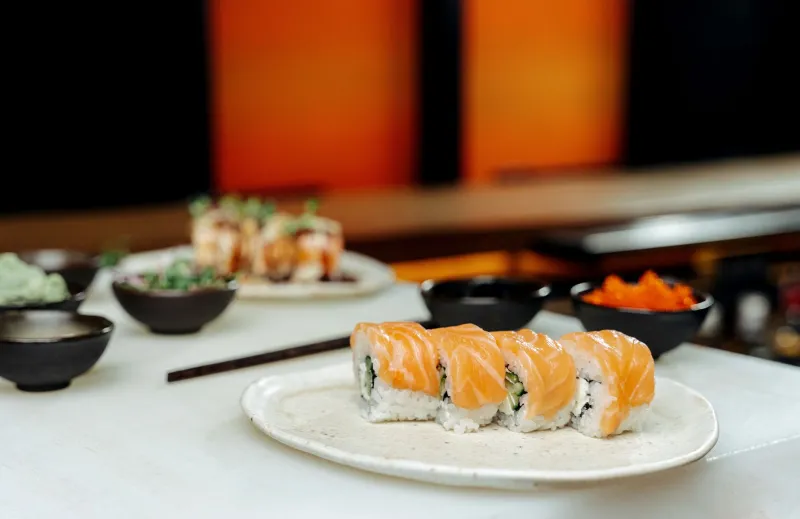
There's an irony buried in all of this. The most innovative sushi chefs — the ones genuinely pushing the art form forward — often produce rolls that look almost simple. A single unexpected flavor note. One non-traditional ingredient that shifts the entire experience. The boldness isn't in the list of components; it's in the confidence to let two or three elements do all the work.
This is where the American fusion scene has sometimes gotten off track. US diners, for understandable cultural reasons, often associate abundance with quality. A towering roll loaded with toppings feels like more value, more creativity, more effort. And chefs, responding to market signals, deliver exactly that.
But the most exciting thing happening in American sushi right now isn't the maximalist roll — it's the chefs who've absorbed that instinct and redirected it. Who bring American boldness to individual ingredients rather than ingredient counts. Who ask not "what can I add?" but "what's the one thing that makes this unforgettable?"
How to Order When You're Not Sure
Next time you're at a fusion sushi spot and the menu feels overwhelming, try this approach: ignore the most complicated roll and look for the one that seems almost too simple for the restaurant's ambition. That's often where the chef's real confidence lives. The roll with two or three ingredients that shouldn't work together but do — that's the one that'll stay with you.
The fusion trap is real, and a lot of restaurants fall into it. But the ones that don't? They're making some of the most interesting food in America right now. You just have to know how to find it.