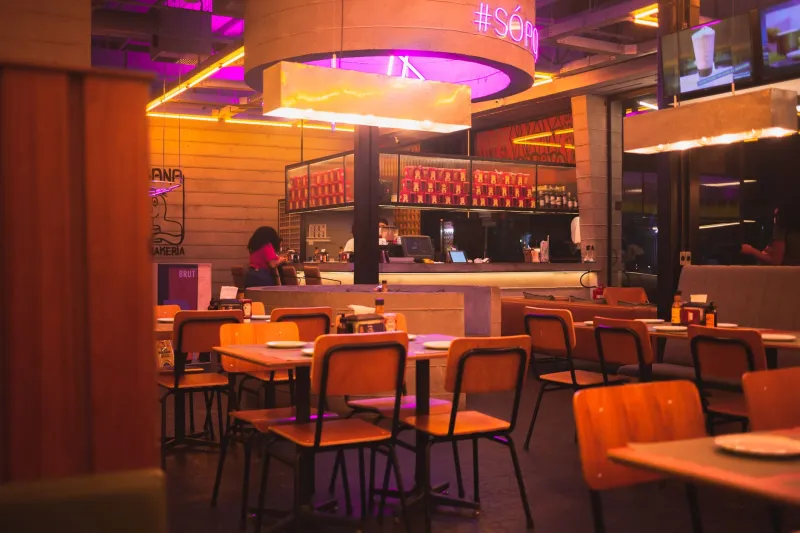
Beat Drop, Bite Drop: How the Music Playing Right Now Is Shaping Every Flavor You Taste

You sit down, pick up the menu, and somewhere in the background, a soft lo-fi beat hums through the room. Or maybe it's a stripped-down jazz track. Or — if someone in the back made a questionable call — it's something with a little too much energy for a Tuesday night. Whatever it is, you probably don't think twice about it. That's kind of the point. But here's the thing: that music isn't just filling dead air. It's working on you in ways you genuinely haven't noticed, and the research backing that up is a lot weirder and more convincing than most people expect.
At Muse Fusion Sushi, we take the full dining experience seriously — not just what lands on the plate, but everything surrounding it. So when we started hearing more chatter in food science circles about the relationship between sound and flavor perception, we had to go deeper.
The Science Is Weirder Than You Think
Let's start with the basics. Researchers at the Crossmodal Research Laboratory at Oxford University — led by experimental psychologist Charles Spence — have spent years documenting what they call "sonic seasoning." The premise sounds almost absurd until you see the data: high-pitched sounds tend to amplify sweet and sour notes in food, while low, bass-heavy sounds push bitter and umami flavors to the front.
For sushi specifically, that's a big deal. A fatty tuna nigiri already carries deep umami and a subtle richness. Play something with a prominent low end — think slow hip-hop or a bass-forward jazz track — and that richness apparently intensifies. Flip it to something bright and treble-heavy, and the same piece of fish can read as lighter, almost citrusy. Same fish. Same rice. Different song.
Dr. Spence's team ran controlled tastings where participants ate identical food samples while listening to different audio tracks. The results were consistent enough that major food companies and restaurant groups started paying attention. This isn't fringe science anymore — it's showing up in culinary school curricula and restaurant design briefs.
Tempo Changes How Fast You Eat (And How Much You Enjoy It)
Beyond flavor perception, music tempo has a measurable effect on eating pace. A study published in the journal Appetite found that people eating in environments with faster-tempo music consumed their meals more quickly and reported lower satisfaction scores compared to those dining with slower background music. The faster the beat, the faster the fork moves — and the less time your brain has to actually register what it's tasting.
For a sushi experience, this matters enormously. A proper piece of nigiri is meant to be appreciated in one or two bites, with a moment to register the rice temperature, the texture of the fish, the balance of seasoning. Rush that window and you're essentially eating expensive fast food.
Restaurant consultant and acoustic designer Maya Chen, who has worked on dining spaces across Chicago and Los Angeles, puts it plainly: "We think about music tempo the same way we think about table spacing or lighting levels. It's a pacing tool. A 90-BPM track at dinner service is going to turn your tables faster, but your guests are going to leave feeling like something was slightly off — they just won't know why."
Genre Isn't Just Vibe — It's Association
There's another layer here that goes beyond pure acoustics. Genre carries cultural and emotional associations that prime your expectations before you even take a bite. Playing traditional Japanese shakuhachi flute music in a sushi restaurant signals authenticity, patience, craftsmanship. It puts diners in a headspace that's receptive to subtlety.
But that doesn't mean it's always the right call. At a place like Muse Fusion Sushi — where the whole identity lives at the intersection of Japanese tradition and American boldness — leaning exclusively on traditional Japanese soundscapes can actually work against the experience. If you're about to eat a roll with crispy shallots, sriracha aioli, and a soy-cured egg yolk, a little contemporary R&B or indie soul might actually frame that bite more honestly than a koto melody.
The key is coherence. The music should tell the same story as the food. A mismatch — say, aggressive EDM drops during a delicate omakase sequence — creates a kind of cognitive friction that makes the food harder to enjoy, even if you can't articulate why.
What We Actually Tested at Muse Fusion Sushi
We kept it informal, but we did actually run this experiment across a few dinner services. We cycled through four distinct soundscapes — traditional Japanese ambient, low-tempo jazz, mid-energy indie pop, and a curated lo-fi playlist — and paid attention to table feedback, pacing, and the items people lingered on versus rushed through.
A few things stood out. The jazz nights consistently produced longer table times and more spontaneous conversation with servers about specific dishes — people were curious, relaxed, exploratory. The indie pop nights were energetic and fun, but guests seemed to order more quickly and decisively, less likely to ask about specials or consider the omakase. The lo-fi playlist split the difference in an interesting way: it was modern enough to feel current, but slow enough to keep the pace measured.
The traditional ambient nights were the most polarizing. Regulars who already had a connection to Japanese cuisine responded really well. First-timers, especially younger guests, occasionally seemed slightly uncertain — like the music was signaling a formality the rest of the space wasn't quite matching.
No single playlist won outright. But the experiment made clear that the choice is never neutral.
What This Means for You as a Diner
Here's the practical takeaway: if you're eating somewhere and something feels slightly off about the experience — the food is technically good but it's not landing the way you expected — check the speakers. Seriously. Are you eating fast because you're hungry, or because the beat is pushing you? Is that roll tasting a little flat because it's actually flat, or because the room sounds like an airport lounge?
And if you're eating at home, this is genuinely worth experimenting with. Put on something slow and low-key the next time you're doing a sushi night in. Give yourself the acoustic environment that lets the food do its job.
At Muse Fusion Sushi, we're always thinking about the full picture — the knife work, the rice, the sourcing, the plating, and yes, the playlist. Because a great bite of sushi deserves a room that's actually listening.